Why Your E-Bike’s Range Dropped, and What to Do About It
Your e-bike used to get you there and back. Now it doesn’t. Before you start pricing replacement batteries, know this: of the five things that cause a range drop, four are free to fix and only one means the pack is finished, and it’s the least likely of the five if your bike is under three years old.
Work through them in this order, because they’re listed by how often they turn out to be the answer. Most people find it in the first two.
There’s one product link on this page, because four of these five fixes cost nothing. abouteBikes is funded by affiliate commission. As an Amazon Associate we earn from qualifying purchases, at no extra cost to you. How we make money.
Think it’s the battery? See our replacement battery picks →
First, establish what actually changed
“Less range” is usually a feeling rather than a measurement, and feelings are unreliable. A route with a headwind feels like a dying battery. Before diagnosing anything, get one number.
Charge to full. Ride a route you know, in the assist level you normally use. Note the miles covered and the battery percentage used. That’s your baseline, and it’s the only way to tell a real decline from a bad week. If you can’t remember what the bike did when new, the manufacturer’s quoted range is a ceiling, not a target. Assume roughly half of it in normal use.
1. It got cold
This is the answer far more often than anything else, and it catches people every fall. Lithium cells rely on chemical reactions that slow down as temperature falls, so a cold pack simply cannot deliver what a warm one does. The capacity hasn’t gone. It’s temporarily unavailable, and it comes back when the battery warms up.
If your range fell off a cliff in October and you’re now worrying in January, this is almost certainly it. The tell is that the loss tracks the weather rather than getting steadily worse.
What to do
- Store the battery indoors overnight rather than in a shed or garage.
- Charge it indoors, at room temperature. Charging a cold pack is bad for it as well as slow.
- Fit it to the bike just before you leave, not the night before.
- On long winter rides, a neoprene cover keeps some of the heat the pack generates.
2. Your tires are soft
The most ignored cause and the cheapest fix. Every tire loses pressure slowly through the tube (that’s normal physics, not a puncture), and a tire well below its recommended pressure deforms more at the contact patch, which means more rolling resistance, which means the motor works harder for every mile.
E-bikes suffer more than bicycles here for the obvious reason: they’re heavier. The same pressure drop costs you more because there’s more weight squashing the tire. And because the motor quietly compensates, you don’t feel the bike getting slower. You just notice the battery going faster.
The recommended range is printed on the tire sidewall. Check pressures weekly with a proper gauge, not by squeezing the tire with your thumb. A tire that feels firm can easily be 15 PSI down, and on a loaded e-bike that is a lot of wasted energy.
If you don’t own a floor pump with a gauge, this is the single highest-value thing you can buy for an e-bike. It will pay for itself in range within a month and it also makes punctures less likely.
Steel barrel, 3in gauge, and a head that fits Presta, Schrader and Dunlop valves, so it works whatever your bike has.
3. You started riding in a higher assist level
Nobody admits to this one, and it’s extremely common. Assist creep happens gradually: a hill you started taking in level 3, a morning you were late, a week you were tired, and level 4 becomes the default without any conscious decision.
The difference is not small. Manufacturers quote range at the lowest assist setting precisely because the top setting can consume it at double the rate or worse. If your battery is emptying twice as fast as it used to, riding in a mode that draws twice the power would fully explain it.
Ride your baseline route deliberately in the level you used to use and compare. It’s a two-minute test that rules out a very common cause.
4. Something is rubbing
A disc brake pad touching the rotor is close to invisible and quietly expensive. On an unassisted bike you’d feel the drag immediately; on an e-bike the motor absorbs it and hands you the bill in watt-hours.
The five-minute check
- Lift each wheel and spin it. It should turn freely for several seconds. A wheel that stops quickly, or makes a rhythmic scraping sound, is dragging.
- Look through the brake caliper at the gap between pad and rotor. There should be daylight on both sides.
- Check the rotor is straight. A bent rotor touches once per revolution. That’s the rhythmic sound.
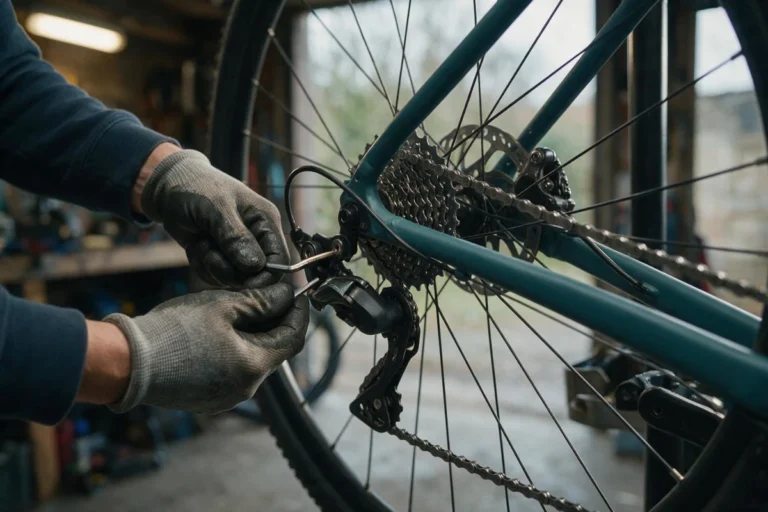
- Look at the chain. A dry, rusty or filthy chain costs real energy; five minutes with a rag and some lube is free range.
A dragging brake is also a safety issue, because it heats the rotor and degrades braking performance. Worth fixing regardless of what it’s doing to your battery.
5. The battery is genuinely getting old
If you’ve ruled out the other four, this is the answer, and it’s a normal, expected thing rather than a fault. Lithium packs degrade on two clocks at once: the number of charge cycles they’ve been through, and their age in years. A pack that’s barely been used but is five years old has still lost capacity.
The pattern that points at genuine degradation looks like this:
| Gradual, not sudden | The loss has crept in over many months rather than appearing in one week. |
| Doesn’t track the weather | It’s the same in July as in January, unlike a cold-weather loss. |
| The gauge falls off a cliff | The last third of the charge disappears much faster than the first third. |
| Charging takes less time | A pack holding less capacity fills sooner. Counter-intuitive, but a real tell. |
If that’s your bike, a new pack is the fix, but price it before committing. A replacement battery routinely costs a third to a half of the bike’s original price, and if the brand no longer trades, one may not exist at all. Our guide to watt-hours and range explains what you should be buying, and the used e-bike guide covers how to check whether a replacement is even available for your model.
How to stop it happening again
Battery life responds to how you treat it, and the habits are easy.
- Don’t store it full or empty. If the bike is going to sit for weeks, leave the pack around half charged rather than at 100%.
- Avoid running it flat repeatedly. Deep discharges are harder on cells than shallow ones.
- Keep it at room temperature. Both extremes cost you: heat permanently, cold temporarily.
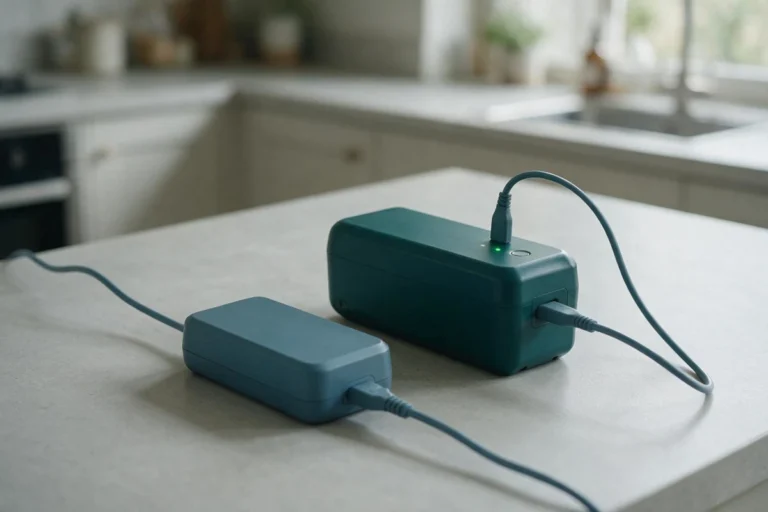
- Use the charger it came with. A cheap replacement of the wrong specification is a fire risk as well as a battery risk.
- Check tires weekly. The cheapest range you will ever buy.
The bottom line
Check the tires, check the weather, check which assist level you’re actually using, and spin both wheels. That’s fifteen minutes and it solves the large majority of range complaints without spending anything. Once it is fixed, our guide to getting more range covers the habits that keep it that way.
Only after all four should you conclude the battery is tired, and even then, get a real measurement from your baseline route before you spend several hundred dollars on the assumption.
Battery finished?
We’ve compared seven spare batteries and chargers, and the three things that must match your bike before you buy.
How we choose
This page isn’t a product list. It’s the diagnostic order we’d work through ourselves, cheapest and most likely first. We don’t test bikes hands-on, so where something depends on your specific model, we’ve said to check rather than guessed.
If you work through all five and the answer still isn’t clear, a bike shop with the right diagnostic tool can read the pack’s actual state of health on most branded systems. That’s worth an hour’s labor before buying a battery.