How to Charge and Store an E-Bike Battery Safely
Most e-bike batteries go their whole lives without incident. The ones that don’t fail badly. A lithium pack in thermal runaway burns hot, gives off toxic smoke and fills a room very quickly. In 2024 it was six, a 67 percent fall that the FDNY credits to shop inspections, enforcement and public education after the city’s certification law came in. The hazard is real, and it responds to exactly the precautions below.
The risk is concentrated, though. Uncertified batteries, the wrong charger, damaged packs and bad charging habits account for most of it, and every one of those is within your control.
There are no product links on this page, only links to our own guides. abouteBikes is funded by affiliate commission from those guides. As an Amazon Associate we earn from qualifying purchases, at no extra cost to you. How we make money.
Looking for a charger or fire bag? See our 7 picks →
Start with the battery you buy
The biggest single factor is the pack itself. Look for UL 2849, which certifies the e-bike’s whole electrical system, or UL 2271, which certifies the battery. New York City requires one of them by law on any e-bike or battery sold there. It’s a good filter wherever you live.
In our e-bike roundup, the Aipas C1 and both Gotrax models state UL 2849. The rest don’t mention it. If you’re converting a bike, the battery is where the urge to save money does the most harm, which our conversion kit guide covers in detail.
The charger matters as much as the pack
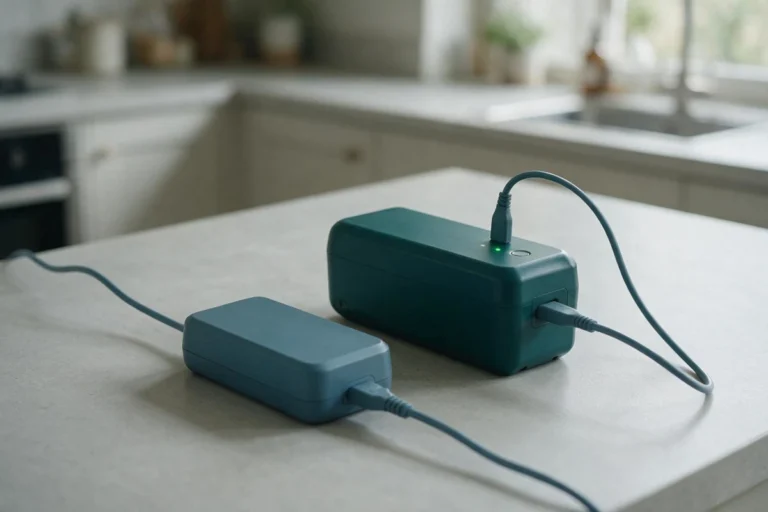
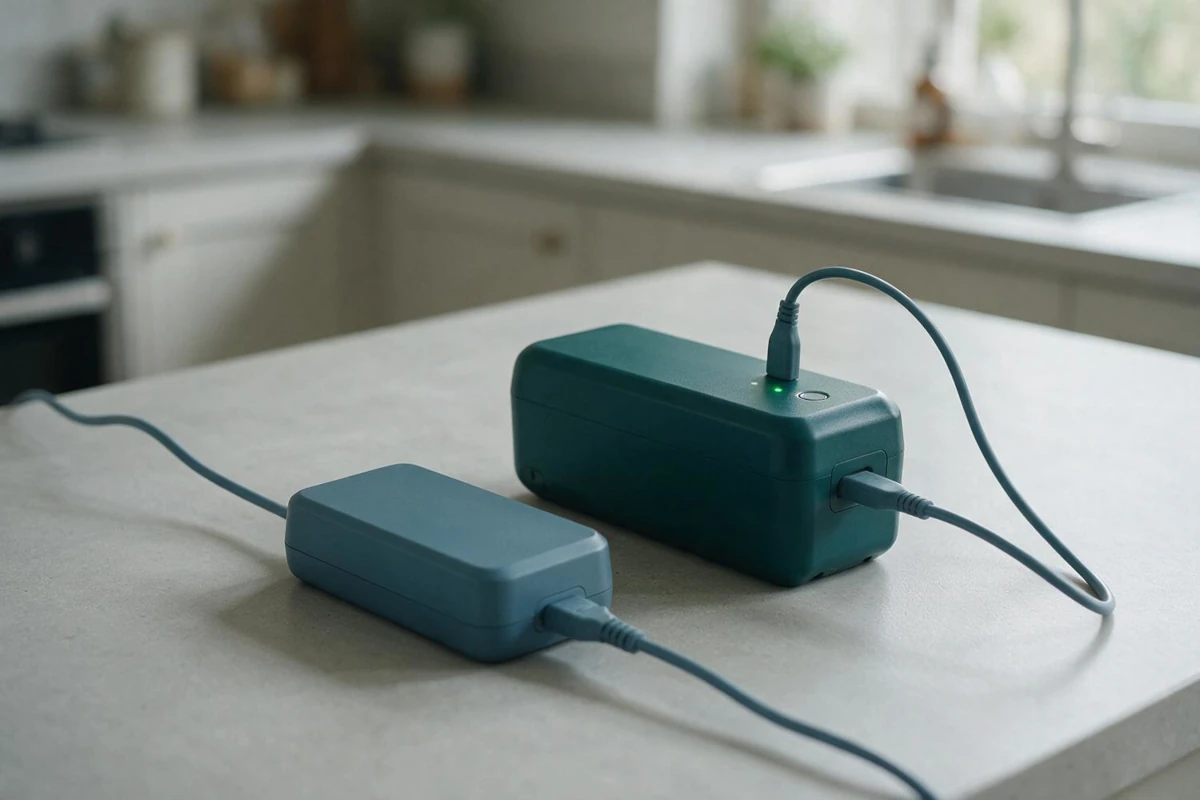
A charger isn’t just a power supply. It’s matched to the pack’s voltage and chemistry, and it’s meant to stop at the right point. A generic replacement with the right plug can have the wrong output, and then the battery’s own protection circuit is the only thing between you and an overcharged cell.
- Use the charger that came with the bike, or a replacement from the same manufacturer.
- If you have to buy third-party, match the voltage and the connector exactly, and look for a UL or ETL mark on the charger itself. A 52V charger on a 48V pack isn’t close enough. It overcharges by design.
- Replace a charger that gets very hot, smells, or has a damaged cable.
Where and how to charge
Fire service advice on this is consistent across the country, and it’s short.
- Charge while you’re awake and at home. Not overnight, and not while you’re out.
- Plug the charger straight into a wall outlet, never an extension cord or power strip.
- Charge on a hard surface, away from anything that burns. Not on a bed, a sofa or carpet, and not next to curtains or a pile of coats.
- Never charge or park the bike where it blocks a way out. The hallway by the front door is the worst spot in the house, because a fire there traps everyone behind it.
- Unplug it when it’s full.
- Have a working smoke alarm in the room, or a heat alarm in a garage, where dust and fumes set off smoke alarms.
Temperature matters too. Let the pack cool for half an hour after a ride before charging it, and let it warm to room temperature after a cold one. Charging a lithium pack below freezing damages the cells, which our piece on why range drops touches on.
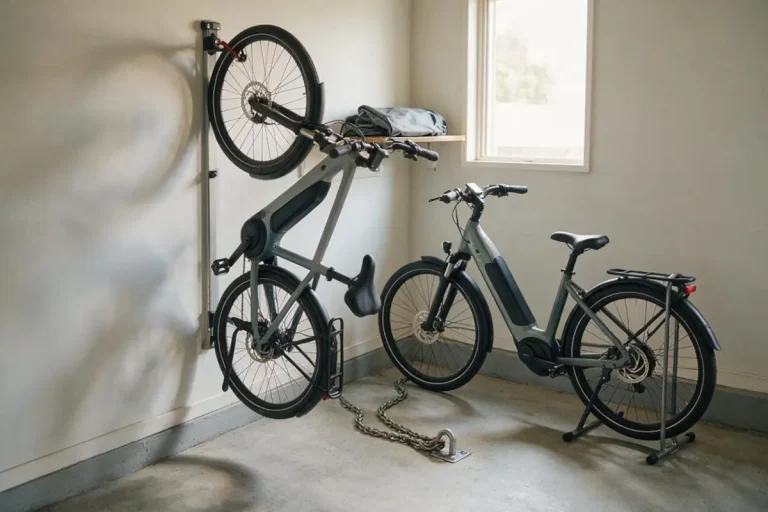
A garage is a better charging spot than a living room, provided it’s above freezing and you’re around while it charges. It puts distance between the battery and the rooms where people sleep.
Storing it between rides and over winter
- For everyday riding, topping up after rides is fine for lithium cells. Leaving the pack on the charger or sitting at 100% for weeks isn’t ideal.
- For anything longer than a few weeks, store it around half charged, indoors, at room temperature, away from sunlight and heaters.
- Check a stored pack every month or two and top it back up to about half. A pack that drains to zero and sits there can be damaged past safe use.
- If the bike lives outside or in an unheated shed, bring the battery indoors for the winter.
- Heat is the other enemy. Don’t leave the bike in a hot car or full summer sun for hours.
Warning signs
Stop using the battery if you notice any of these.
| Swelling | Any bulge in the case. Gas building up inside means cells are failing. |
| Heat | Hot to the touch when it hasn’t just been ridden or charged. Warm after charging is normal. Hot is not. |
| Smell | A sweet, chemical or burning smell from the pack or the charger. |
| Noise | Hissing, popping or crackling from the pack. |
| Damage | A cracked case, a hard drop, a crash, or water getting inside. |
| Behavior | Refusing to charge, or a gauge that jumps around. Range shrinking slowly over years is normal aging. A sudden change is not. |
If you see any of them, stop charging and stop riding. If it’s safe to do so, move the pack outside onto concrete, away from the house. Then contact the manufacturer or a bike shop.
After a crash or a hard drop, inspect the pack even if the bike seems fine. Damage inside isn’t always visible outside, which is one reason a used battery with an unknown history is a gamble. Our used e-bike guide covers what to check. And never open, repair or rebuild a pack yourself, or buy one somebody else rebuilt.
If a battery catches fire
Get out, close the door behind you, and call 911. Don’t try to fight it.
A battery in thermal runaway feeds itself, with each failing cell heating the next, so it keeps burning and can reignite after it looks out. The smoke is toxic. A home extinguisher might knock down the flames around it but won’t stop the cells. If a pack is only smoking and it’s already outside, keep everyone well back and call the fire department anyway.
Getting rid of an old battery
Never put a lithium battery in household trash or recycling. Crushed in a garbage truck, it can start a fire. Tape over the terminals and take it to a household hazardous waste site, the manufacturer or a bike shop. Call2Recycle runs drop-off locations that accept e-bike batteries in many areas.
If the pack is simply tired rather than damaged, our battery explainer covers what to look for in a replacement.
If you change one thing
Move the charging spot. If your battery charges in the hallway, by the front door or in a bedroom overnight, that’s the highest-risk habit on this page and the easiest to fix. Charge it in the kitchen or the garage, on a hard surface, while you’re awake, and unplug it when the light goes green.
Upgrading your charging setup?
Our battery and charger picks include a fire-resistant bag for charging and storage, plus the three things a replacement must match.
How we choose
This page isn’t a product list. The advice is drawn from fire service guidance and the battery certifications that exist, and we’ve kept it to what applies to almost every e-bike.
Your manufacturer’s instructions take priority where they differ. If a pack shows any of the warning signs above, treat it as a hazard, not a repair job.