How to Keep Your E-Bike From Being Stolen
No lock stops a thief with a cordless angle grinder and enough time. What a good setup does is make your bike slower, louder and more annoying to steal than the one next to it, and recoverable if it goes anyway. That’s the realistic goal, and it’s very achievable.
E-bikes are worth stealing in a way most bicycles aren’t. They resell fast, the batteries sell on their own, and owners often can’t prove which bike was theirs. Every step below closes off one of those.
There’s one product link on this page, plus links to our own guides. abouteBikes is funded by affiliate commission. As an Amazon Associate we earn from qualifying purchases, at no extra cost to you. How we make money.
Just want a lock? See our 7 picks →
Start where the bike sleeps
The place a bike is most likely to be stolen from is home. The garage, the shed, the apartment bike room, the porch. A thief gets privacy and unlimited time there, and the owner assumes the building is doing the security. It isn’t.
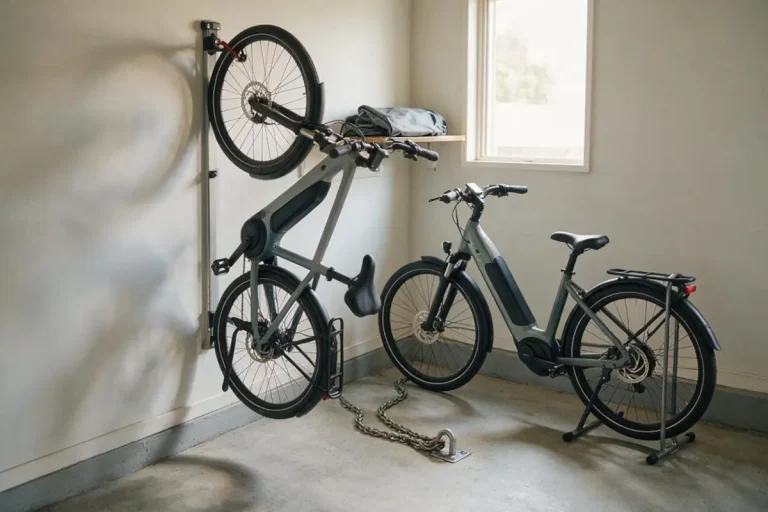
- In a garage or shed, lock the bike to something fixed. A ground anchor bolted into concrete turns a hiding place into an obstacle. Screwed into a wooden floor, it’s decoration.
- Keep it out of sight from the street. A bike visible through a garage window gets noticed by the wrong people.
- In a shared bike room, lock it exactly as you would on the street. Everyone with a key fob has access, and so does anyone who follows them in.
- If you can bring it inside your home, do.
A 14mm shackle on a hardened baseplate with anti-drill fixings. Only as strong as what you bolt it into, so concrete or masonry, not timber.
How to lock it on the street
Lock to something that can’t be lifted, cut or unbolted. Check the bike rack is actually bolted down. Short signposts let a thief lift the whole bike, lock and all, over the top, and scaffolding comes apart with a wrench.
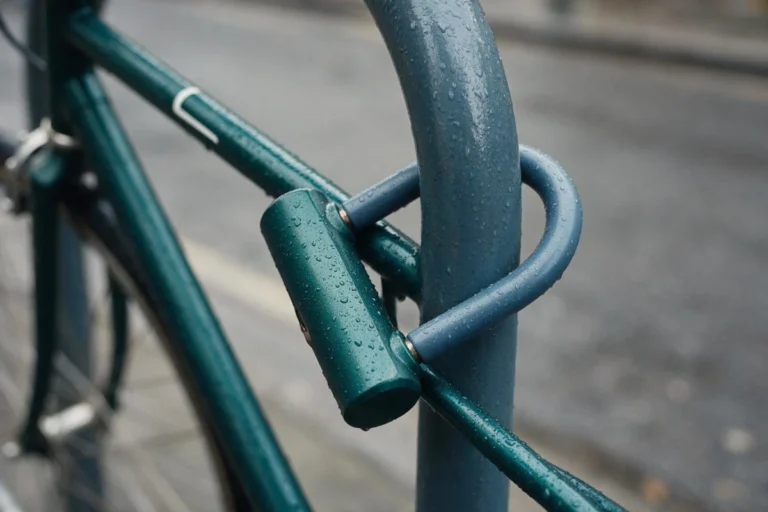
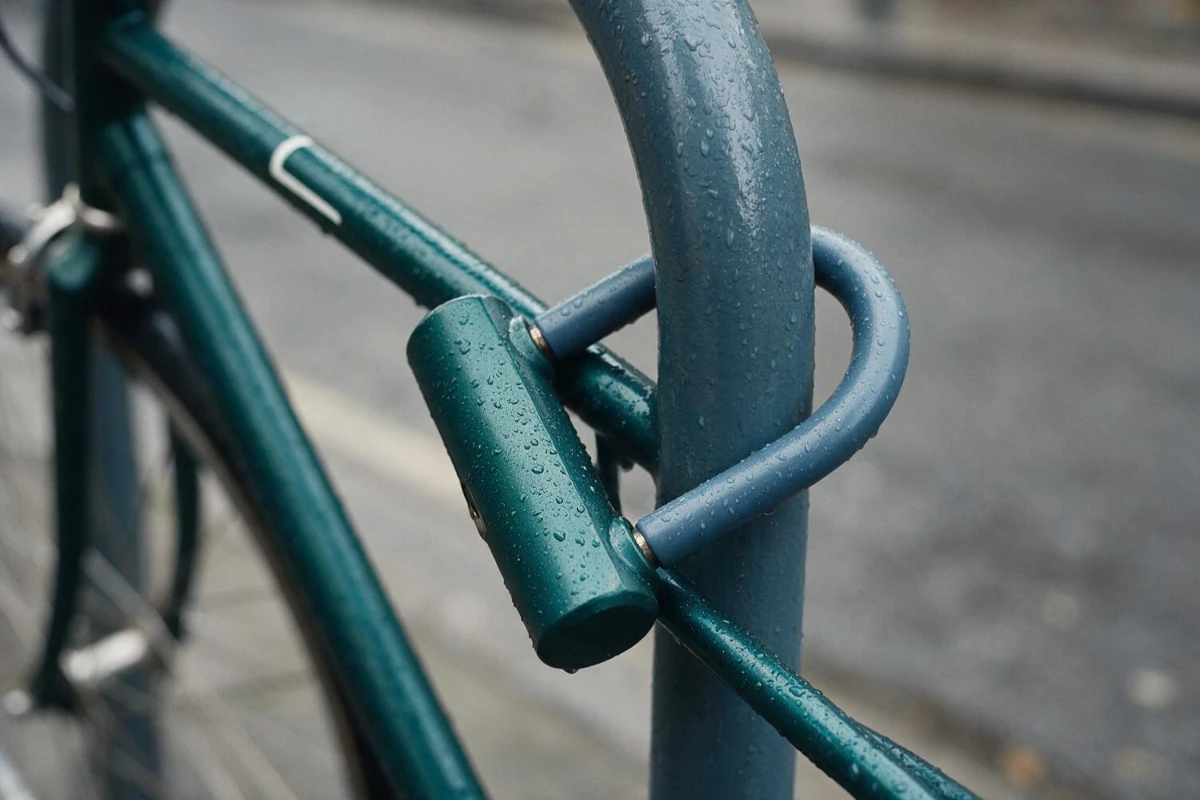
- Get the U-lock around the frame and the rear wheel as well as the post. On a hub-motor bike the rear wheel is the motor, the most expensive part after the battery.
- Fill the lock. The less empty space inside the shackle, the harder it is to get a jack or a bar in.
- Keyway facing down and off the ground if you can manage it.
- A second lock of a different type on the front wheel. Different locks need different tools, and most thieves carry one kind.
- Park where people walk past. Ideally next to a nicer bike with a worse lock.
For the lock itself, the Kryptonite New York Standard is our pick for daily use. If the bike lives outside in a city, the Hiplok DX1000 is one of the very few locks built to resist an angle grinder rather than bolt croppers. The trade’s rule of thumb is to spend about ten percent of the bike’s value on locks, and our lock guide explains why most of the security ratings on the packaging are meaningless.
Take the easy parts with you
Anything that comes off without tools will come off without you. Before you walk away:
- The battery, if it’s removable. It’s worth hundreds of dollars on its own, and a bike without one is a much less attractive target.
- The display, if it unclips.
- Clip-on lights. They disappear constantly.
- Panniers and trunk bags. The quick-release hooks that make them easy for you, covered in our racks and panniers guide, make them just as easy for anyone else.
Quick-release wheels and seatposts are a gift to thieves. If your bike has them, swap to locking skewers or run a cable through them.
Register it tonight
Stolen bikes get returned when somebody can prove who owns them. This takes ten minutes and costs nothing.
- Find the frame serial number, usually stamped under the bottom bracket, and photograph it.
- Register the bike with Bike Index and Project 529. Both are free.
- Photograph the whole bike from both sides, plus anything distinctive like scratches, stickers or accessories.
- Keep the receipt. Note the battery and motor serial numbers too if they have them.
Registration protects the next buyer as well. Anyone following our used e-bike guide runs the serial number before handing over money, and a registered stolen bike shows up.
Trackers help, within limits
A hidden tracker won’t stop a theft. It shortens the gap between the theft and a location you can give the police.
AirTags and similar tags are cheap and report their location through other people’s phones, which works well in cities. The catch is anti-stalking protection: an iPhone carried near an unknown AirTag eventually alerts its owner, and recent Android phones do the same, so a thief can find it. Hide it well, inside the frame or under a bottle cage, and treat it as a head start rather than a guarantee.
GPS trackers with their own SIM report live location without relying on nearby phones. They need charging and usually a subscription. Some e-bikes have one built in, often with an app that can lock the motor remotely, which is worth asking about before you buy.
If you track your bike to an address, give it to the police. Don’t go and knock on the door yourself.
Check your insurance now
Home and renters policies vary a lot on bikes. Some cap bicycle theft at a low figure. Some exclude e-bikes because they count as motorized vehicles. Some require a lock of a stated standard for a bike taken from outside the home. Call your insurer and ask whether your e-bike is covered, up to what value, and whether there are conditions on how it’s locked. If the answers disappoint, specialist bicycle insurance exists and covers e-bikes specifically.
If it’s gone
- Report it to the police with the serial number and get a report number. Your insurer will want it.
- Mark the bike stolen on Bike Index and Project 529.
- Search Facebook Marketplace, Craigslist and OfferUp every day for the next two weeks. Stolen e-bikes often reappear within days. Search by brand and model, and look in neighboring towns too.
- Post photos in local cycling groups.
- If you find it listed, send the listing to the police. Don’t arrange to meet the seller on your own.
Where to start
Register the bike tonight. It’s free, and nothing else on this page works as well after the fact. Then fix wherever the bike sleeps: a ground anchor at home plus one good U-lock for the day does more than the most expensive lock on its own. And bring the battery inside, every time.
Ready to buy a lock?
We’ve compared seven e-bike locks on their security ratings and what owners report, including one of the few built to resist an angle grinder.
How we choose
We don’t test locks hands-on. The picks here come from our lock guide, where we read each specification and independent rating and set it against what owners report over time.
Security is about layers rather than any one product. If your area has a bike registration scheme run by the local police, use that as well as the national databases.