How to Get More Range From Your E-Bike
The battery sets the size of the tank. How you ride decides how fast you empty it, and the gap between a careful rider and a careless one on the same bike can easily be a third of the range or more. Almost none of it costs money.
These are in rough order of how much they’re worth. If your range has fallen compared with when the bike was new, start with our guide to why range drops instead, because that’s a diagnosis problem rather than a technique one.
There are no product links on this page, only links to our own guides. abouteBikes is funded by affiliate commission from those guides. As an Amazon Associate we earn from qualifying purchases, at no extra cost to you. How we make money.
Want the simple fix? See our spare battery and charger picks →
1. Ride a little slower
This is the big one, and it’s physics rather than opinion. Air resistance grows with the square of your speed, and the power needed to push through it grows with the cube. Going from 20 mph to 28 mph takes roughly two and three-quarter times the power just to beat the wind.
You don’t have to crawl. Dropping from 20 to 17 on a long flat stretch is barely noticeable in the saddle and very noticeable in the battery. On a Class 3 bike, cruising at 22 instead of 28 can be the difference between getting home and pedaling a 60-pound bike the last three miles.
2. Use the lowest assist that feels right
Manufacturers quote range in the lowest assist level for a reason. The top setting can use energy at twice the rate of the bottom one, or worse. Most riders settle into a level early on and never question it.
Try riding your usual route one level lower for a week. Then use the assist buttons actively: drop a level on the flat, add one for the hill, drop it again at the top. It becomes automatic within a few rides.
3. Pedal, don’t just throttle
On a Class 2 bike, throttle-only riding uses far more energy than pedal assist, because the motor is doing all of the work instead of some of it. Listings that quote both figures show it plainly: the Gotrax R1 quotes 25 miles in pedal assist and 15.5 on throttle alone.
The throttle earns its keep pulling away from a junction or getting a heavy load moving. Use it for that, then pedal.
4. Pull away gently
Getting a heavy bike from standstill to speed is the most expensive thing you do on a ride. Hub motors in particular are at their least efficient pulling hard at low speed. Stop-start town riding costs far more per mile than a steady cruise, which is why the same bike can do 30 miles on a rail trail and 18 across town.
So give it a pedal stroke before the assist kicks in, avoid full throttle from a standstill, and look further ahead so you coast into red lights instead of braking late and accelerating again.
5. Use your gears
Shift down before you stop and before a hill, the same as you would on an ordinary bike. Grinding away in a high gear at low cadence makes the motor work harder for the same speed.
This matters most on a mid-drive, which drives through the chain and runs most efficiently when you keep your cadence up. It’s one reason the Bafang mid-drive climbs so well on less energy than a bigger hub motor.
6. Pump your tires every week
Soft tires deform more and roll worse, and on a heavy e-bike the motor quietly makes up the difference out of your battery. A tire that feels fine to your thumb can easily be 15 psi down. Check with a gauge, and run toward the upper half of the range printed on the sidewall for paved riding.
A floor pump with a readable gauge, like the Topeak JoeBlow, is the cheapest range upgrade there is. It also prevents most pinch flats.
7. Pick tires for the road you actually ride
Knobby tires and 4-inch fat tires cost real range on pavement. If your riding is mostly paved, a smoother, narrower tire rolls noticeably easier. The Schwalbe Marathon Plus at 35mm is the commuter’s choice. Just check that any new size clears your frame and doesn’t upset a wheel-based speed sensor, which our tire guide explains.
8. Stop anything from rubbing
A dragging brake pad or a dry chain wastes energy you never feel, because the motor absorbs it. Lift each wheel and spin it. It should turn freely for several seconds. Clean and lube the chain every few weeks. Our monthly maintenance checklist covers both in fifteen minutes.
9. Keep the battery warm in winter
Cold lithium cells can’t deliver their full capacity. The loss is temporary, but on a January ride it’s real. Store the battery indoors, fit it just before you leave, and consider a neoprene cover for long winter rides. Charge it at room temperature, never while it’s frozen. Our guide to charging safely explains why.
10. Carry less, or carry it lower
On the flat, weight matters less than speed. On hills it matters a lot, because every pound gets lifted. Clear out the bag you’ve been carrying around all month. When you do carry a load, panniers hanging low are easier on the handling than a crate stacked high, as our racks and panniers guide covers.
11. Choose the route, and read the wind
A slightly longer route with fewer stops and gentler climbs often uses less battery than the direct one. A headwind costs as much as a hill. If you have a choice of routes on a windy day, take the sheltered one out and let the wind bring you home.
12. Charge full before a long ride, and take the charger
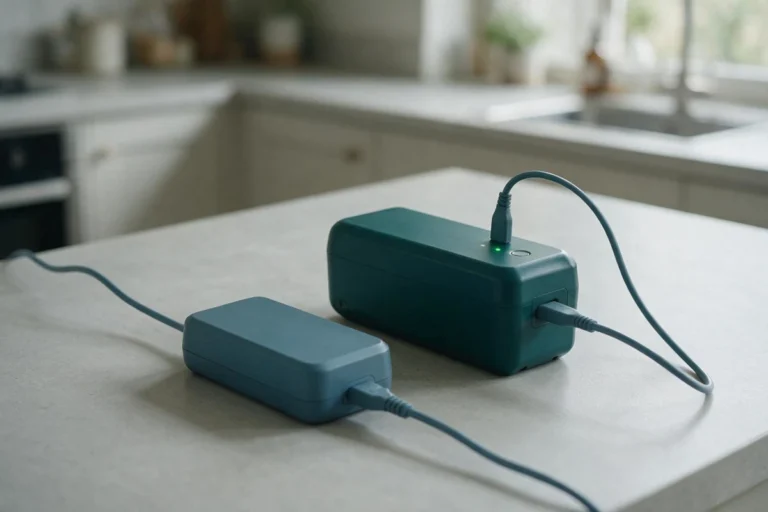
For everyday riding you don’t need to keep the pack at 100%. Before a long ride, charge it fully just before you leave rather than the night before. If the ride is near the limit of your range, pack the charger. An hour plugged in at a café adds more miles than any riding technique.
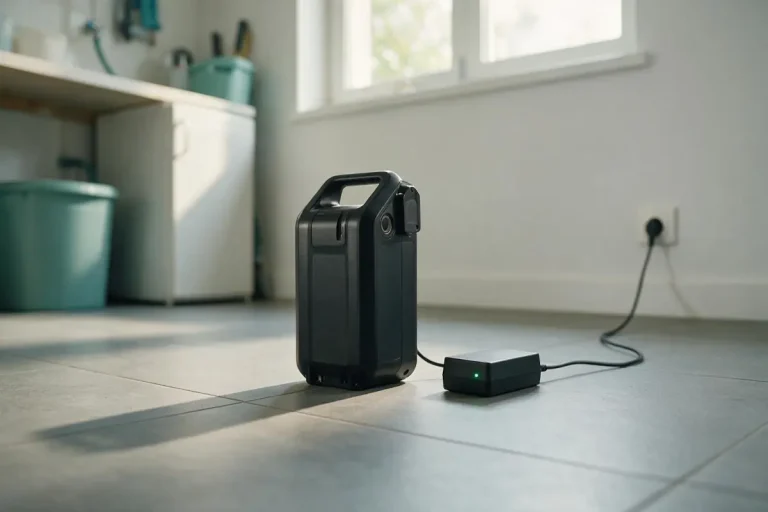
Some bikes can take a second battery, like the Gotrax Dolphin. If you regularly ride further than one pack allows, a spare is the only fix that isn’t a compromise.
What doesn’t help much
Regenerative braking. Very few e-bikes have it, and only direct-drive hub motors can. Where it exists, the gain is a few percent at best, mostly on long descents. It’s not a reason to buy a bike.
Running the battery flat to “train” it. That’s a myth from older battery chemistry. Lithium packs don’t need it and don’t like it.
If none of it is enough
Technique can’t turn a small battery into a big one. If you ride sensibly and still come up short, the answer is capacity. Our battery explainer shows how to work out the watt-hours you actually need, and the e-bike roundup lists packs from 281Wh to 720Wh. For most daily riders, anything under about 500Wh means riding carefully every day.
Need more range than habits can give you?
A second charger at work or a spare battery is the other way to go further. We’ve compared seven, and the three things that must match your bike.
How we choose
This page is technique rather than a product list. The advice follows from how motors, batteries and air resistance behave, and from what owners consistently report. We don’t test bikes hands-on, so the numbers here are rules of thumb rather than measurements.
The best way to see what works is to measure it yourself. Ride the same route twice, once as usual and once with a couple of these changes, and compare the battery percentage at the end.